

If your website isn’t generating the quality or quantity of leads and sales that you would like, the first place you should look is to optimise your service pages.
A great service page will engage, educate, and inform your audience. It will communicate how your service works, the benefits it generates, and how your ideal audience can get started.
Where most businesses make the mistake of trying to send more traffic, what they typically need first is a better service page.
This makes sure that the traffic that you’re sending is more likely to convert, which increases your return on marketing investment across all channels.
So, how do you craft a service page that ticks all the boxes for Google, engages your reader, and ultimately gets results? Read on as I show you how.
The Role of a Service Page
An individual service page is different from a general “services” page, which offers an overview of every service provided by the business.
Ideally, each offering you provide will have a dedicated service page. If you have more than one service, you should have multiple service pages.
Not only is this better for your audience because they can access the specific information they’re searching for, but it’s also ideal for SEO because Google ranks pages, not websites – the more relevant a page is to the keyword you want to rank for, the better – and individual service pages are the way to achieve this.
In more detail, each of these pages should:
- Grab the reader’s attention: You will draw the reader in and immediately convey benefits with compelling, benefit-driven copy.
- Explain the service and how it will work for them: Identify and validate their pain points, establish your background and credentials, demonstrate what you have to offer, and offer proof of success.
- Call them to action: The ultimate step is for the right visitor to take action to become a customer. This is where you summarise the value of your service and show them the simple next step to get started, e.g. call now, get a quote, etc.
Service Page Conversion Framework
Effective service pages use a timeless framework that’s based on human psychology and years of testing. See below for a summary of the service page framework:

Related: How to Create Location Pages for SEO and AI Visibility
How To Structure a Service Page for Conversions
It’s time to outline the overall structure and contents of a service page, including the key SEO components mentioned above.
1. Get Attention Through Clarity
An effective service page immediately grabs the attention of the target audience by describing what you do, who you do it for, and how to buy from you.
You can make a powerful first impression on your audience with a great headline – but too many businesses try to create something clever. Rather than trying to come up with a fancy marketing message, start by being as clear as possible.
For example, ff you offer plumbing services in Melbourne, try: “Reliable Plumbing Services in Melbourne”.
It’s not fancy, and it’s not going to win any creative marketing awards – but it will help you attract and convert more business.
Your service page header section should include whichever primary SEO keyword you’ve chosen, a clear heading, a supporting heading and a call to action.
2. Outline 3 Key Benefits
Following the header section, the next step is to outline 3 key benefits. This helps increase the desire that your visitor has for your service by helping them see the outcomes of working with you.
Benefit-focused copy converts 20-40% better than feature-focused copy (source: Marketing LTB), so this is a very powerful section of your service page.
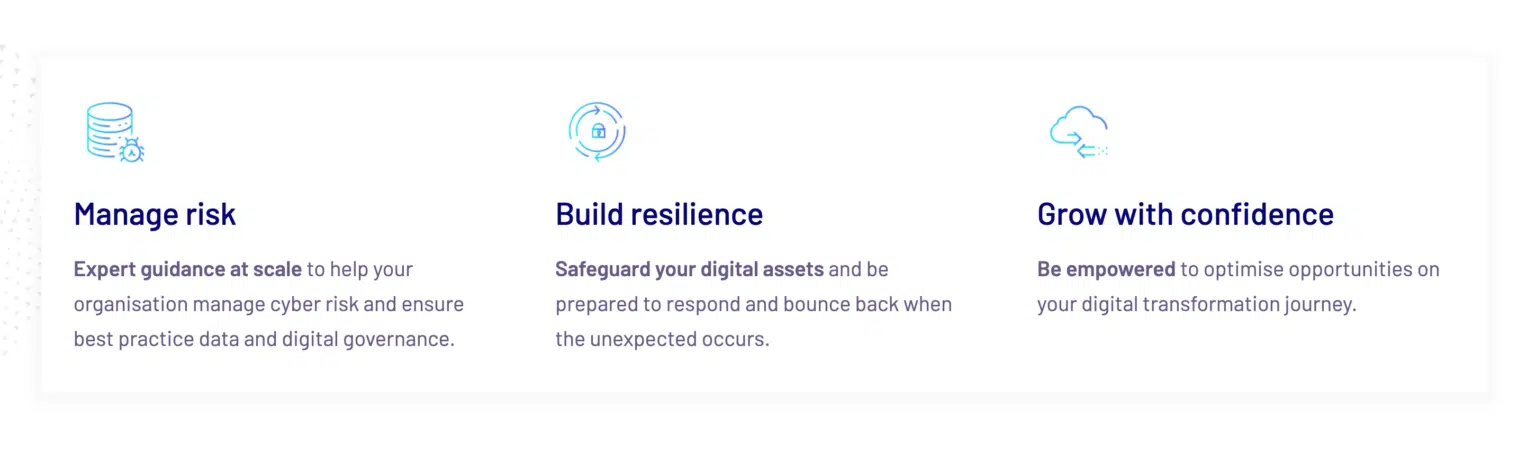
One of the ways we list benefits on our client’s website is to include them as a 3-column layout with a heading, icon and brief text to further add context to the benefit.
Below is an example of the benefit section from the CyberCX website:
3. Identify Pain Points
Now you have their attention and have articulated the benefits of your service, the next step is to show you understand your target audience and their problems.
This is done by creating a headline with the core pain point or frustration they experience, followed by a few sentences to dig deeper.
“The pain is the pitch.”
– Alex Hormozzi
4. Present the Solution
At this point, you’ve already painted a picture of your target audience and the problems they’re experiencing. Now is the time to present the solutions you offer.
Your copy here will be super clear about what your service is, how it helps solve problems, and the advantages it delivers.
Incorporate relevant headlines and SEO keywords as you detail your benefits.
5. Offer Social Proof
At this point, your prospect is likely to be asking the question, can I trust them? You can assure them your service delivers on its promises by showing them evidence of past results and satisfied customers.
Use third-party review sites such as Google Business Reviews, Clutch or Trust Pilot to show verified reviews to prove you’re not just making them up.
This section may not have a strong SEO focus, but there will still be some opportunities to incorporate keywords with customer testimonials, case studies, and a call to action.
6. Explain Your Process
By now, you should have successfully sold your prospect on the value of your service. In this section, you want to further describe what is involved, including what happens when they sign up and an overview of any fees and costs.
Keep the overall steps incredibly simple here. You do not need to tell them all the details; just the first thing they need to do, a summary of what you will do, and then the outcome they can expect once the work is done.
This section may also include relevant keywords and a call to action.
Here’s an example from Brisbane acupuncturist Trent Dolman:

7. Address Frequently Asked Questions
If your service page is useful, relevant, and engaging to your prospective customers, they will be ready to sign up at this point.
This section should anticipate and address any lingering doubts with further guarantees, social proof, and a keyword-enriched FAQ section.
8. Include a Call to Action
Make the final step for the customer as clear and frictionless as possible with a great call to action.
This CTA should include at least one contact point, whether it’s a phone number or contact form or both. We recommend a two-step contact or lead form for easier readability and to ensure higher-quality leads.
Service Pages Examples
For inspiration, see examples of great service pages below:
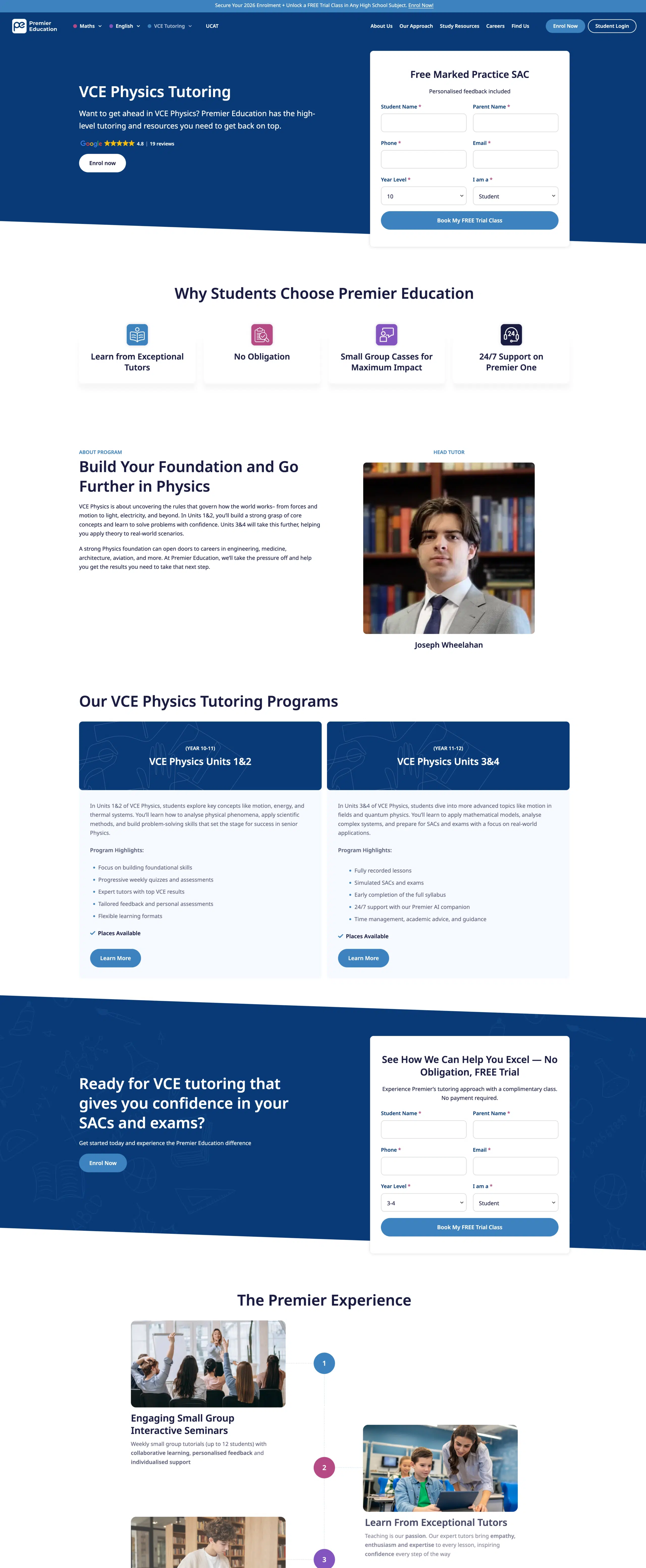
VCE Physics Tutoring
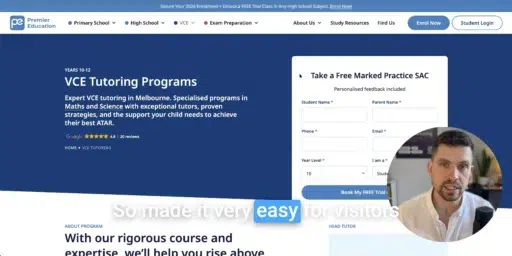
The Premiere Education service page does a great job of focusing on conversions with a clear headline, compelling trust signals and a lead generation form right in the header.
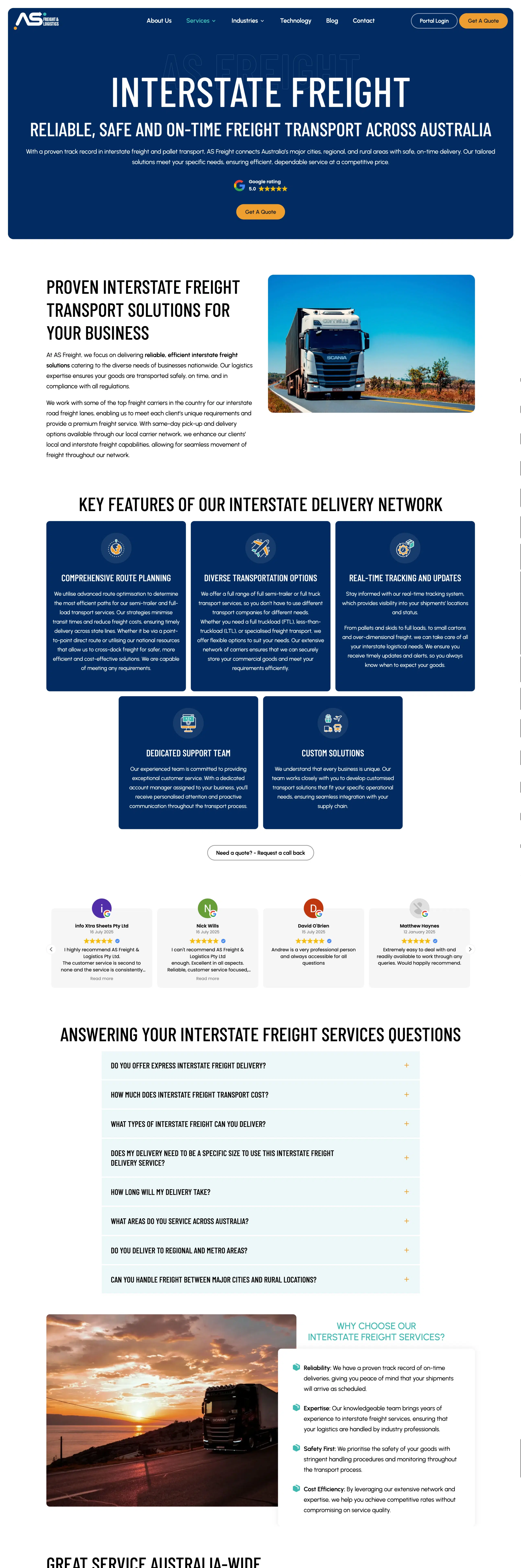
Interstate Freight Services
This landing page includes a clear, bold headline immediately followed by social proof. As the target audience are typically time poor and looking for quotes quickly, the call to action is a clear and simple “Get A Quote” button.
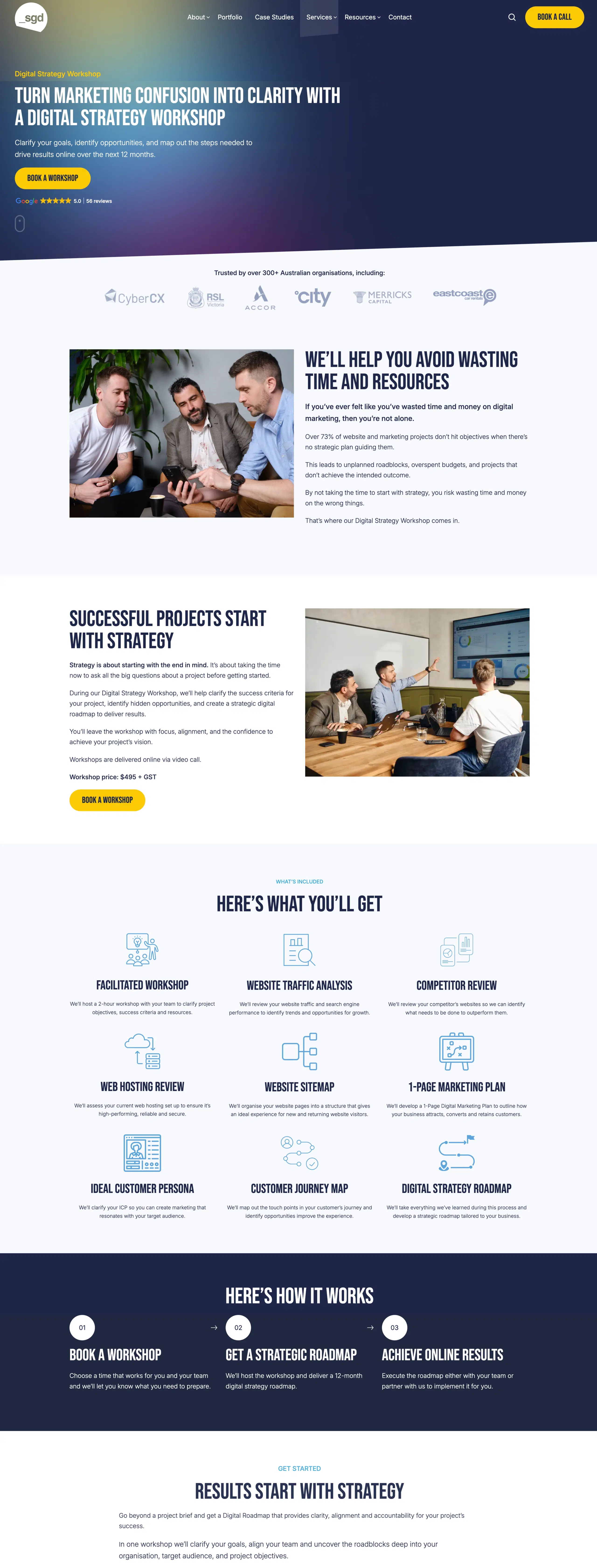
Digital Strategy Workshop
This page outlining our Digital Strategy Workshop incorporates key SEO components, including several sections with H1 and H2 headlines, copy outlining pain points and benefits, and graphics that visualise our process and value to customers.
We also include comprehensive social proof, an FAQ section and a booking form.
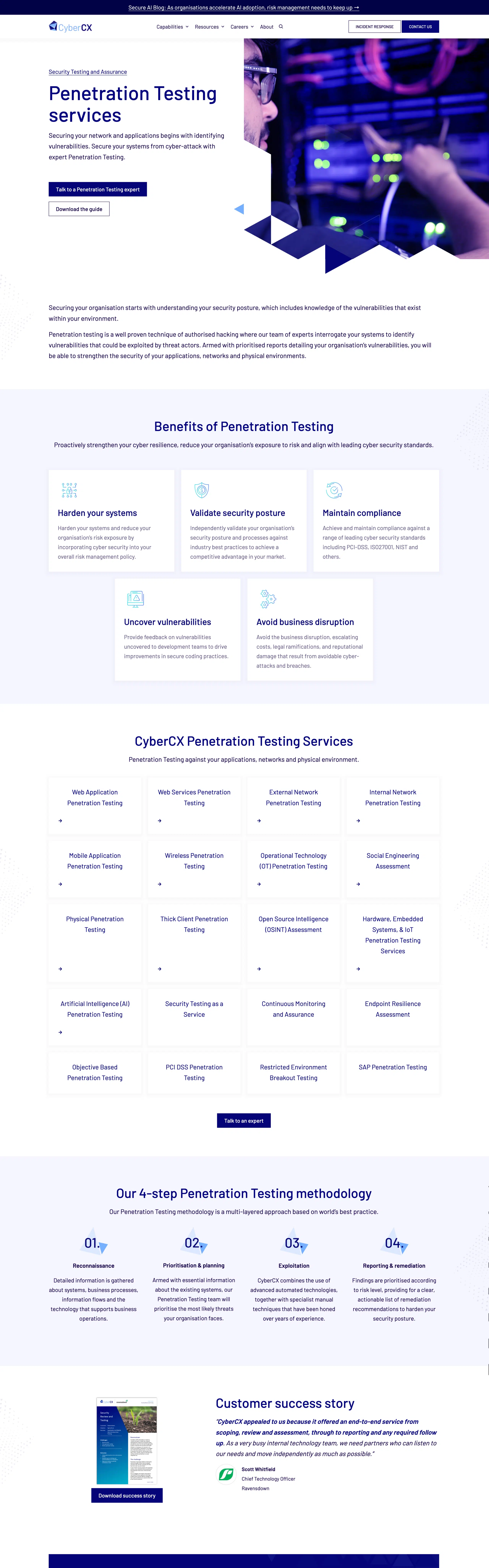
Penetration Testing Services
CyberCX came to us for help with a service page promoting their penetration testing services, which prevent cyber attacks.
The keyword-enriched content of this page helps prospective customers understand what penetration service testing is and why CyberCX is a national cyber security leader.
How To Structure a Service Page for SEO
In addition to conversions, you’ll need to structure the page for SEO. This will help with attracting the right traffic to your website so that they convert.
I’m putting this section after conversions because many businesses focus on SEO and traffic before conversions – which is the wrong way around.
Once you’ve optimised your page for conversions first, then follow the below steps to optimise for SEO performance and traffic generation.
1. Include A Single Keyword Focus
SEO keywords are words or phrases that are typed into a search engine when searching for information. They help the search engine match the searcher with the most relevant results based on their query.
When you are crafting content for your service page, you want to first select keywords that will drive meaningful traffic. They should accurately describe what you do and match what your audience is already searching for.
It’s important to research and select keywords, including your primary/focus and secondary keywords. Your research should account for a number of factors, including a keyword’s relevance, search volume and overall impact.
For example, our primary keyword for our web design service is ‘web design Melbourne’ as this is a highly relevant keyword that our ideal audience would type in to find us and has a high commercial intent.
2. Divide Content Into Headings
Your goal here is to help Google identify and sort the content on your website. If your content is unstructured or unorganised, Google is less likely to favour it.
A simple way of organising the content on your service page is to divide it into sections. Each section should have at least one clear headline, with primary or secondary keywords in the text, and an associated title tag.
The headline you want to draw the most attention to will have an H1 title tag. Following this, your other sections will have headlines with H2, H3 or H4 tags.
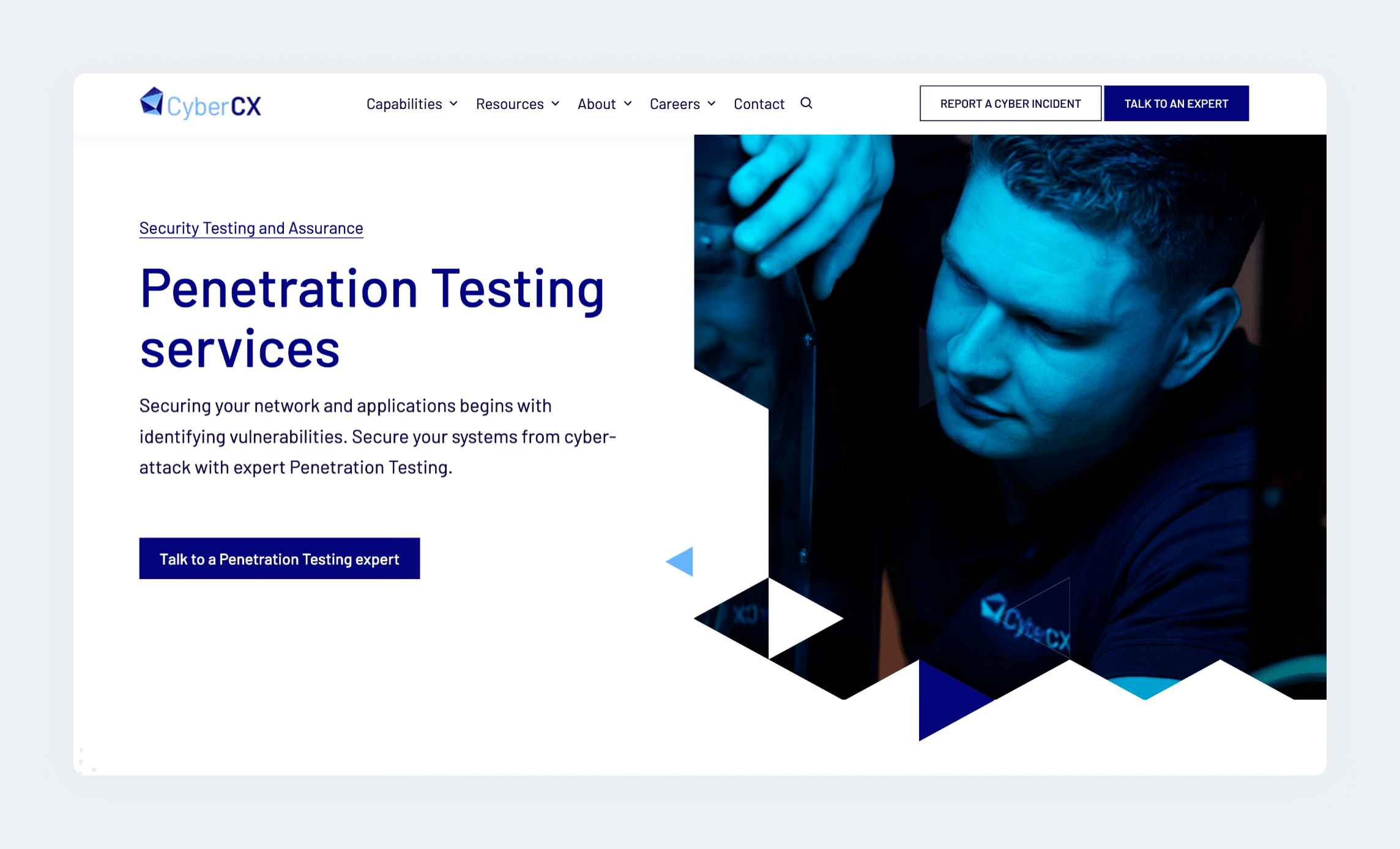
For example, our client CyberCX is Australia’s leading team of penetration testing experts. Notice how the page has clear headings.
3. Add Links To Related Content
Your service page should also include hyperlinks, preferably to other internal pages.
These links will help guide your reader through your website and emphasise the theme and relevance of your content to Google.
For example, on our web design Melbourne page, we showcase a link to our web design process and our website portfolio:

4. Use A Clear Layout
Overall, your service page won’t be complete without a visually engaging and highly readable layout.
The page should be easy to scan and digest, thanks to clear headlines and title tags (including H1, H2, and H3), bullet points, and compelling images and video.
A section for FAQ (frequently asked questions) and a clear CTA (call to action) can also draw the reader’s eye and boost your SEO score.
Great Service Pages Get Both Traffic & Conversions
A service page provides everything the prospective customer needs to know about one specific service.
For best results, your service pages should not only be useful for your audience but also optimised for Google traffic and rankings.
By implementing the above strategies, you’ll ensure your business not only gets found in the search results, but that more visits to your website will convert into leads to grow your revenue.
Need Help With Your Service Pages?
If you’re a service-based business in Australia and you’d like help attracting and converting more leads through your website, then we can help.
Get in touch to talk to a website and SEO expert.