Key Points from Google’s Guide to Optimising Your Website for Generative AI Features



Written by: Simon Kelly
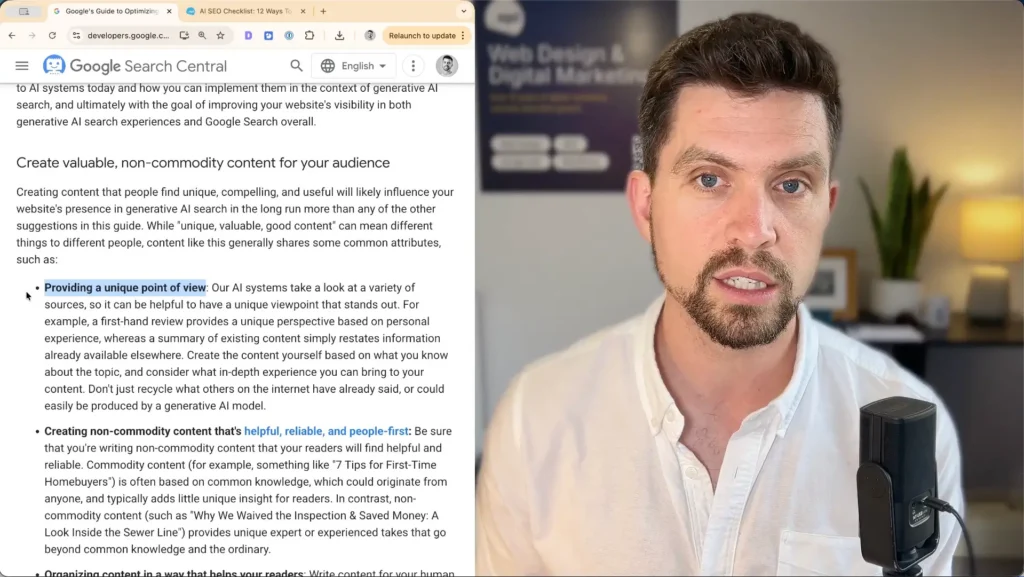
Google released a guide on optimising your website for generative AI features on Google search, and the advice might surprise you.
I think this comes at a great time because of all the AI slop and sheer volume of content that exists. So much of it feels like a massive distraction.
It’s never been easier to produce content. And a lot of what’s being produced now is generic, AI-generated, or stitched together without much thought.
That’s why Google’s new AI search guidelines ( published last Friday on Search Central) feel less like a technical update and more like a reset away from bulk-produced-AI-slop.
The core message is that optimising for AI search is still SEO in that the same principles apply (relevance, quality and authority).
What’s changed is the standard for what counts as quality.
A few things stood out to me:
1. Unique perspective beats commodity content
AI can write “7 tips for first home buyers” all day. Therefore so can your competitors.
Try creating actually unique content from experiences that you had with your clients. That kind of lived experience is what AI engines (and humans) reward.
2. Real photos and videos matter
Stock imagery and AI-generated visuals are becoming background noise. Photos of your actual team are a differentiator and trust builder.
3. Helpful, reliable, people-first content wins
The goal is not to chase fleeting trends and AI hacked – it’s to genuinely answer the question your customer came to find.
The businesses that lean into this benefit twice: from AI search visibility, and from the trust that real, human content compounds over time.
An example of a AI SEO hack right now are articles that talk about the “top ten businesses in “[whatever category]” and then list themselves as the number one result.
The shortcuts and AI hacks are a trap. As the AI systems and algorithms evolve, the hacks get stamped out and typically include a penalty that makes it not worthwhile.
The slower, more honest work is the opportunity.
It’s not sexy marketing, but things that have delayed gratification rarely are.
You can see the full article from Google here on “Optimizing your website for generative AI features on Google Search“