SEO vs Google Ads: How to Choose the Right Mix in 2026



For business owners and marketing managers in 2026, the question is rarely “should we do SEO or Google Ads?”. The real questios is how to balance speed, certainty, competition, and commercial risk.
Paid advertising costs continue to rise, while organic growth with SEO can take longer to earn than many teams expect.
In Australia, organic search (SEO) still drives around 68 per cent of all website visits, reinforcing its role as the primary long‑term traffic channel (Search Scope).
At the same time, Google Ads costs typically sit between AUD $2 and $4 per click on average, with highly competitive industries paying significantly more (White Peak Digital).
With the growth of AI, buying journeys are also more complex, with prospects researching, comparing, and revisiting brands over weeks or months rather than converting from a single click.
This begs the questions:
How much to invest in Google Ads? And is SEO worth it in 2026?
This article breaks down how SEO and Google Ads actually work in 2026, where each channel makes sense, and how to design the right mix based on real-world conditions that align with business objectives.
Key points
- SEO and Google Ads solve different problems across the customer journey
- Google Ads are most valuable for fast learning, testing, and controlled visibility
- SEO delivers compounding returns by building trust, authority, and demand capture over time
- The strongest strategies adjust the mix as competition, costs, and growth stage change
How to decide between SEO and Google Ads
This matters because most marketing plans fail at the decision stage, not the execution stage.
Choosing the wrong channel mix creates unnecessary cost, slow learning, and pressure to prove results.
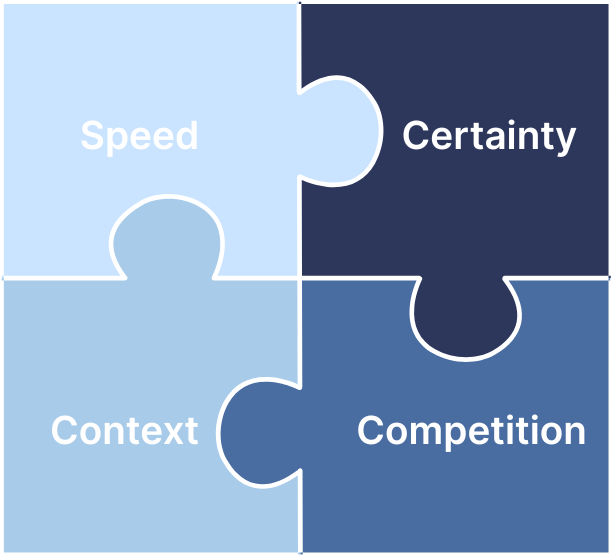
When businesses debate SEO versus Google Ads, they are usually debating four underlying factors.
- The first is speed. How quickly do you need visibility and leads?
- Second is certainty. Do you need predictable volume now, or can you invest in future demand?
- Third is competition. Are you entering a crowded market where others already dominate search results?
- Fourth is context. Are you launching something new, or scaling something proven?
Very few businesses should choose only one channel.
The strongest results come from understanding what each channel is best at, then applying it intentionally.
SEO is designed for compounding growth. Google Ads is designed for speed, control, and testing.
Used together, they reduce risk and improve results throughout the customer journey.
What SEO is for in 2026, and why it takes time
Many teams abandon SEO before it has a chance to work, or invest without understanding what actually drives results.
How modern SEO actually works
SEO today is not just about blog posts or keywords. It is about pages and content that clearly match search intent, are technically sound, and build trust with both users and search engines.
Google evaluates relevance, authority, and user engagement. AI-driven discovery layers are also becoming more prominent, making structured content and clarity more important than ever.
Why SEO takes time
New content and web pages start with little trust.
They need to be crawled, indexed, compared, and tested against competitors. As other businesses publish content and update their sites, rankings naturally shift.
SEO is not a set-and-forget channel. Ongoing improvement is required to maintain and grow visibility.
Ongoing improvements also signal to the search engines that you are actively maintaining your content, which is a positive SEO signal.
Why organic search still converts well
Organic search consistently delivers high quality leads because users trust non-paid results.
These users are often researching, comparing, and shortlisting, not just clicking impulsively.
Real-world example: cyber security SEO
A cyber security client operating in a highly competitive market faced cost per click rates exceeding $70.
Despite strong ad creative and targeting, paid traffic did not convert at sufficient volume to justify ongoing spend.
The buying cycle was long, with multiple decision makers and extended research phases. Prospective clients did not convert from a single ad click.
SEO presented a stronger business case. By building visibility across awareness, consideration, and decision-stage searches, the client captured demand throughout the journey. Over time, organic search delivered more consistent lead volume and higher quality opportunities.
Google Ads did not disappear. Instead, ads were used defensively to protect branded search terms from competitors bidding on the client’s name.
What Google Ads is for in 2026, and why it is not a bad channel
Google Ads is often blamed when the real issue is strategy, tracking, or conversion quality.
Used correctly, Ads remain one of the fastest learning tools available to marketing teams.
How Google Ads works
Google Ads operates on an auction model. You bid for visibility, and you pay when someone clicks. Competition directly affects cost per click, and automation plays a larger role than it did in previous years.
Success depends less on platform tricks and more on strategy, tracking, and landing page quality.
Strengths of Google Ads
Google Ads provides immediate visibility. Campaigns can be launched quickly, adjusted in real time, and scaled with budget.
It is one of the most effective tools for testing messaging, offers, and conversion behaviour.
Limitations and risks
High costs do not guarantee quality. Poor landing pages, weak offers, or unclear messaging can quickly burn budget.
Ads stop delivering the moment spend stops, which creates dependency if they are not part of a broader system.
SEO vs Google Ads: side by side
SEO offers slower initial results but builds long-term assets that continue to perform. Google Ads offers speed and predictability, but at an ongoing cost.
Over a 12–36 month period, SEO often becomes more cost efficient, while Ads remain valuable for control, testing, and coverage gaps.
The question is not which is better, but where each fits.
The biggest mistake businesses make
The most common mistake is treating SEO and Google Ads as a binary choice.
Other common errors include running ads before fixing conversion issues on the website, publishing SEO content without a clear intent, and measuring success using traffic alone instead of lead quality and revenue.
How SEO and Google Ads work together
This is where most performance gains come from. When SEO and Google Ads are planned together, each channel reduces the weaknesses of the other.
Ads are most powerful when used to bridge the gap while SEO ramps up.
Google Ads can drive traffic to new landing pages quickly, allowing teams to test messaging, offers, and conversion rates. Once a page proves it converts, SEO can be used to build organic visibility for that page.
Over time, paid spend can be reduced as organic traffic increases.
Think of Ads as starting high and tapering down, while SEO starts low and climbs steadily.
Keyword intent and the customer journey
This matters because not all traffic has the same value. Choosing the wrong channel for the wrong intent leads to wasted spend or slow results.
Not all keywords serve the same purpose.
Some searches signal early-stage research. Others signal readiness to engage or buy.
For example, a term like “support at home” indicates early funding or information intent. A term like “in-home massage for elderly” signals service intent.
Early intent terms may justify Ads when SEO would take too long. Service intent terms can often be owned through SEO, especially when rankings already exist.
When to prioritise SEO
This matters when budgets are tight and competition is high. Investing in SEO at the right time can significantly reduce long-term acquisition costs.
SEO should be prioritised when you already rank for core terms, when competitors outrank you for valuable searches, and when you need to build depth without expanding navigation.
In markets with high CPCs and long buying cycles, SEO often delivers stronger ROI by capturing demand across multiple stages.
When to prioritise Google Ads
This matters when waiting is more expensive than spending. Ads provide speed, coverage, and data when organic visibility is not yet viable.
Google Ads should be prioritised when there is no organic visibility, when launching new services, or when testing demand with controlled budgets.
Real-world example: mobile massage
A mobile massage provider invested in SEO years ago but did not maintain momentum. As competition increased, rankings slipped.
Without consistent reporting, the decline went unnoticed.
The strategic response combined Ads and SEO. Google Ads were used to regain visibility for terms competitors dominated, while SEO investment focused on rebuilding organic strength. Over time, this reduced reliance on paid traffic.
The four pillars of SEO

SEO relies on four distinct pillars:
- Content ensures pages are helpful and relevant.
- Technical SEO ensures speed, crawlability, and structure.
- On-page SEO ensures clarity, intent matching, and internal linking.
- Off-page SEO builds authority through external signals.
These are separate skill sets. Few teams can execute all four well without support from a professional SEO.
Related: The Four Pillars of SEO
Resourcing and capability
This matters because most marketing teams are resource constrained.
SEO and Google Ads rely on multiple skill sets, from technical foundations and content strategy through to conversion optimisation and analysis. Expecting one person to do all of this well is rarely realistic.
Most organisations see better outcomes with a hybrid model. Internal teams retain context and ownership, while specialist partners provide structure, depth, and execution support where it counts.
Even large organisations rarely rely on a single generalist for SEO and Ads.
Smart Google Ads plays
Defensive brand campaigns protect branded search terms from competitors.
The lowest risk expansions amplify services that already convert, before testing new areas.
Reporting and systems
This matters because execution without feedback leads to drift.
Good reporting supports decision making, not just dashboards. Marketing teams need visibility into what people are searching for, how competitors are positioned, and which pages and keywords are influencing pipeline.
Keyword research reveals demand that analytics alone cannot. Combined with conversion tracking and regular reviews, it allows teams to adjust priorities before performance slips.
Strong teams reverse engineer competitor strategies, then execute against a clear six-month plan.
AI search visibility in 2026
AI-driven discovery is growing. Structured data, clear content, and technical foundations support both traditional SEO and AI visibility.
Real-world example: education and tutoring
An education provider used Google Ads to test landing page messaging and lead quality. Once performance was proven, the learnings were applied to SEO pages.
Leads increased from around 20 per month to over 50 per month, representing more than 150 percent growth.
Next steps
The strongest strategies treat SEO and Google Ads as parts of one connected system, not isolated tactics.
That system starts with clear priorities, realistic expectations, and the discipline to measure what actually drives qualified leads, not just clicks or impressions. Over time, it becomes easier to adjust spend, focus effort, and make confident decisions because each channel is playing a defined role.
Teams that perform best in this space typically combine internal ownership with external expertise, using proven frameworks, consistent reporting, and regular review cycles to keep momentum.
The right mix reduces risk, improves learning, and builds sustainable growth.
FAQs
Neither is universally better. The right choice depends on timing, competition, and business goals.
Ads do not directly improve rankings. They help indirectly by accelerating learning.
When SEO pages consistently generate qualified leads, paid spend can be tapered strategically.
Meaningful results often take several months, depending on competition and execution.
Most benefit from using both, but the mix should change over time based on results.