



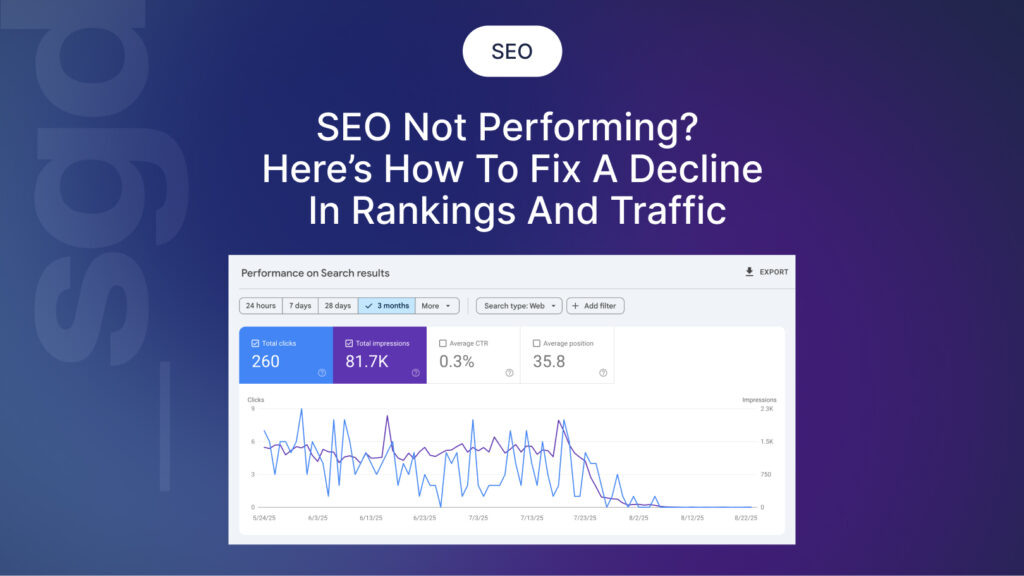
Seeing a drop in rankings or organic traffic can be frustrating. The good news is that most declines are fixable if you take a structured approach.
Here’s how to troubleshoot a decline in SEO performance effectively.
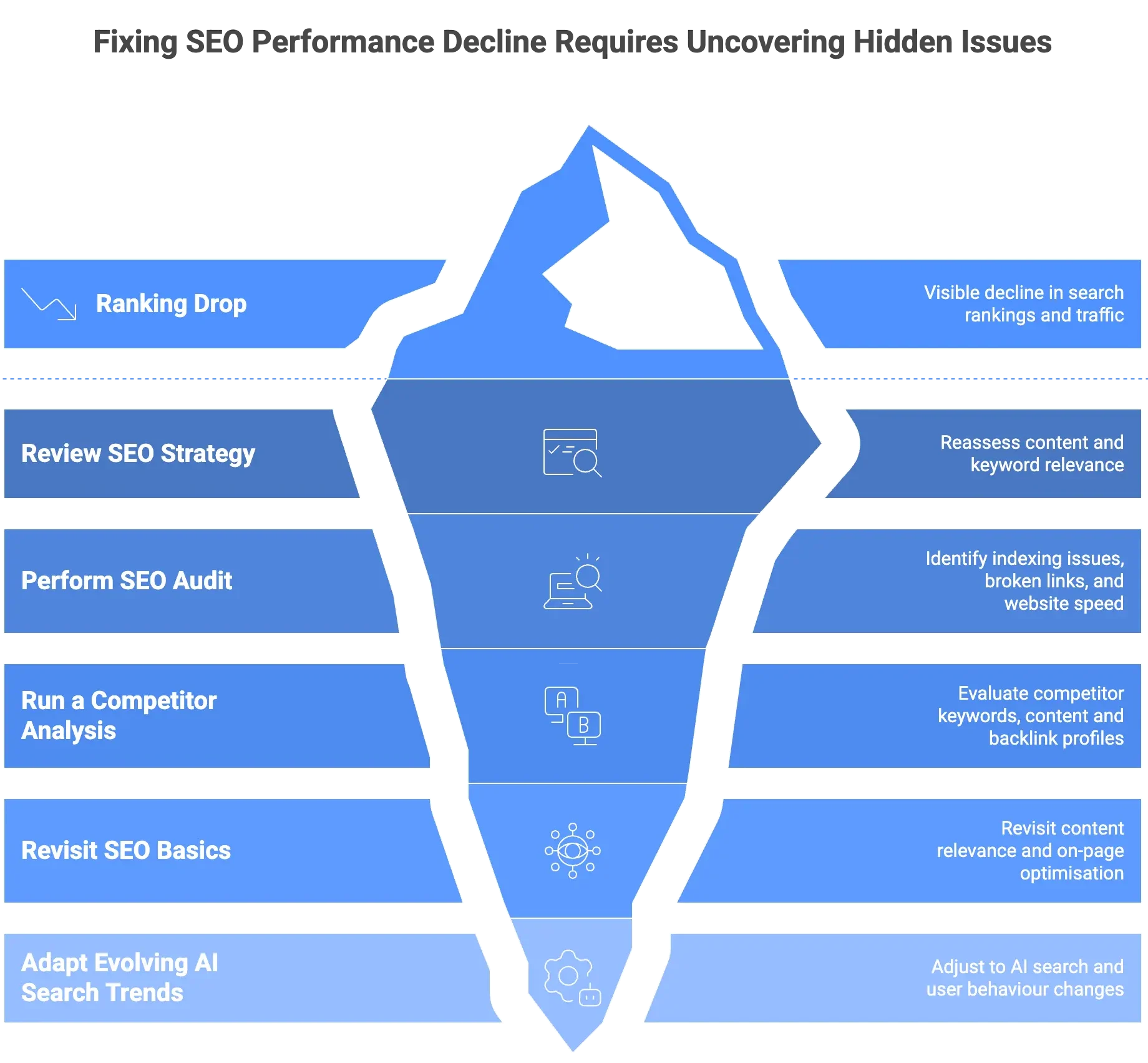
Step 1: Don’t Panic: Start with Observation
The first recommendation is to wait a few days and monitor changes.
SEO results naturally fluctuate day to day, so it’s important not to make drastic changes at the first sign of trouble.
Give it a day or two and compare results across other campaigns and keywords. Note any patterns or trends, especially for your primary keywords.
If the decline persists, it’s time to take action.
Step 2: Reassess Your SEO Strategy
The first step when you notice a sustained decline is to review your SEO strategy.
Ask yourself, “Has anything changed?”
- Does your content still align with search intent?
- Have new competitors entered the space?
- Has user behaviour shifted, or are there new trends affecting your audience?
Revisit your initial keyword research and audience analysis.
- Are your target keywords still relevant to your audience?
- Are your pages optimised enough to compete for these terms?
Declines often signal it’s time to refine or refresh your SEO strategy.
Update your goals, optimise content, increase trust signals, and ensure your approach remains aligned with the latest market needs to bridge the competitive SEO gap.
Step 3: Perform an SEO Audit
If your strategy still seems sound, the next step is to run a full audit of your site using tools like Google Search Console, SEO Ranking Ahrefs, or Screaming Frog.
Look for the following:
- Indexing Issues: Ensure all important pages are indexed correctly.
- Broken Links: Identify and fix any dead links that could harm user experience and rankings.
- Site Speed: Slow-loading pages can cause drops in rankings. Optimise for faster load times.
- Crawl Errors: Check for errors that might prevent search engines from fully crawling your site.
- Meta Tags: Ensure title tags, meta descriptions, and header tags are optimised and present.
- Mobile-Friendliness: Verify your site is responsive and performs well on mobile devices.
A technical SEO audit often uncovers hidden issues that may be contributing to the decline.
Addressing these quickly can help restore your performance.
Step 4: Evaluate Competitor Activity
A rankings drop may mean your competitors have stepped up their efforts.
Analyse competitors who are now ranking higher for your target keywords.
Use tools like SE Ranking, Surfer SEO or Semrush to review their pages:
- Are they publishing fresh, high-quality content?
- Is there content more relevant and useful?
- Is their on-page optimisation more refined?
- Do they have a stronger backlink profile?
- Do that have higher trust signals?
Identify the improvements they’ve made and consider how you can adapt your strategy to stay competitive.
Step 5: Go Back to SEO Basics
Sometimes, resolving a decline is about revisiting the SEO fundamentals.
Ask yourself:
- Is your website content relevant, authoritative, and useful?
- Are you targeting keywords that align with user intent?
- Is your on-page SEO optimised with proper headings, keyword placement, and internal linking?
- Are your backlinks still high-quality, relevant, and active?
A return to core SEO principles can help pinpoint overlooked gaps or weaknesses.
Small adjustments to your content, trust signals, internally linking, or keyword targeting can often make a significant difference.
Step 6: Adapt to Trends and AI Advancements
Declines in rankings can also reflect changes in the SEO landscape, particularly with AI integration and evolving search behaviour.
Consider:
- AI in Search: Adjust content to align with generative AI summaries or conversational search queries.
- Featured Snippets: Structure your content to target snippet opportunities.
- User Intent: Ensure your content meets the nuanced needs of evolving search queries.
Staying current with industry trends helps you proactively address shifts that might impact your rankings.
For more guidance around ranking in the AI results, view our AI SEO checklist.
By following these steps, you’ll identify the root cause and get your SEO performance back on track.
Get expert help with your SEO
If you’ve noticed a decline in rankings or organic traffic, now is the time to act.
Book a call with our team and we’ll review your SEO performance together, identify opportunities, and give you clear next steps to get back on track.


