AI SEO: The 2026 Checklist

Many businesses are still debating whether AI search matters and if it’s actually going to have an impact.
Meanwhile, their competitors are getting cited by name.
When someone asks ChatGPT, Claude, Perplexity or Gemini for a recommendation, they are not shown the traditional ten links in Google – they’re given a direct answer.
If you’re not part of the AI answer, you’re not part of the shortlist.
These are numbers are worth paying attention to:
- AI traffic converts at 4.4x the rate of traditional organic search
- 87.4% of AI referral traffic comes from ChatGPT
- Google still delivers 345x more traffic than AI platforms combined
So optimising for AI search isn’t about abandoning Google (just yet!), it’s about adding a new layer of growth while it is still early.
Here’s how the marketing strategy changes from traditional search to AI:
Traditional search:
- Rank on page one
- Compete for clicks
- Traffic comes from search intent
AI search:
- Get cited as the recommendation
- Be the answer (not one of many)
- Traffic comes with AI endorsement
The opportunity right now is visibility plus authority within AI. The window is open because most businesses are not deliberately optimising for AI citations.
Here are the practical steps to optimise your business to show in the AI search results:
1. Maintain a fast website
Slow websites are more time consuming for AI and search crawlers to visit.
If you want your website to be crawled and visible, your website needs to be fast – especially on mobile.
Use a tool like GT Metrix to test website speed.
2. Structure content clearly
Use a consistent heading hierarchy, including H1, H2, H3. AI tools rely on this structure to extract meaning.
Divide your content into clear sections that are easy to scan, which is ideal for both AI tools and your users.
Add direct answers under each heading, rather than adding fluff, so these answers can be easily retrieved.
3. Lead key pages with summaries
Start important service pages with a short summary that explains who you help, what you do, and where.
Clear positioning improves both Google rankings and AI citation.
For blog content, include a section such as “key takeaways” in the top section of the content.
4. Show real expertise
Name your authors and include their credentials, links to social profiles and author schema.
Include case studies with real results as AI models prioritise demonstrable authority.
5. Optimise for featured answers
Use FAQs with add structured data to get your content appearing in search.
Answer common buyer questions in plain language as this increases the chance of being pulled into summaries.
6. Track AI-driven traffic
In GA4, segment traffic sources so you can see referrals from ChatGPT and other AI tools. This will help give you a realistic picture of your traffic and conversions from AI sources.
7. Strengthen brand signals
Consistent messaging across your website, LinkedIn, directories and media mentions builds authority.
AI systems look beyond your homepage to create an understanding of your business, so make sure that it’s consistent across the web.
8. Earn high-quality brand mentions
Links are no longer the only way to measure authority (as it was in traditional SEO).
AI systems are smart enough to see where your brand has been mentioned in plain text, and use this to increase its understanding of your brand.
Mentions and links from relevant publications strengthen both traditional SEO and AI visibility.
Overall, AI search optimisation is just an evolution of good SEO.
With Google still commanding 345x more traffic than AI platforms combined, the opportunity is layering AI visibility on top of what already works with SEO.
The businesses that implement now will build authority that compounds. The ones that wait will find the gap harder to close.
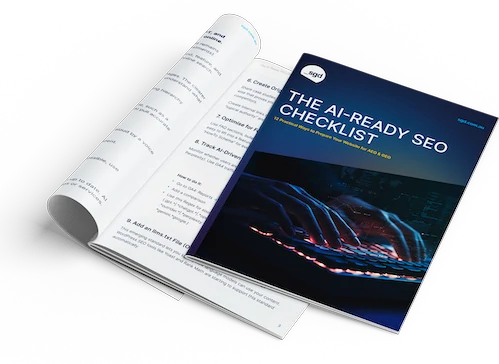
If you would like the full breakdown of how to optimise for AI, including a practical audit checklist, you can read it here: